

Key takeaways:
- GEO gets your brand named inside AI answers, not just ranked on Google.
- AI tools recommend brands that are clear, consistent and mentioned on trusted sites.
- SEO is still the foundation; GEO builds on top of it.
A buyer in Lahore asks an AI search platform to compare solar installers. The response discusses equipment, warranties, and installation support, but does it include your business, and are the details accurate? Your website should provide information that helps buyers assess these differences.
Generative engine optimization focuses on improving your brand’s visibility within AI-generated responses. For Pakistani businesses, that starts with useful evidence, accurate service information, and content grounded in experience. This guide explains how to strengthen those foundations, understand how sources inform answers, and assess whether increased visibility brings relevant interest to your business.
What It Means to Appear in an AI Answer
So, what is GEO in practical terms? It involves improving your content and online presence so your business can be discovered and accurately represented in generated responses.
Your business might receive a brand mention, while a citation links to a page supporting the answer. A platform may also summarise information without naming every source directly.
For example, Perplexity could reference your solar installation guide when explaining warranty exclusions, without recommending your company as an installer. These are different outcomes. Focus on publishing information that helps customers evaluate their options, while recognising that each platform decides which sources and businesses to include.
Understand GEO Without Getting Lost in Labels
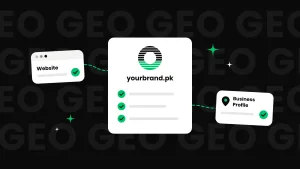
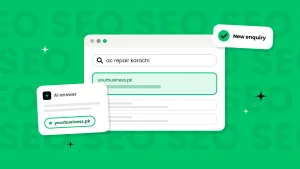
The GEO vs SEO comparison is about emphasis, with considerable overlap. SEO supports discovery through search engines, while generative engine optimization focuses on visibility within generated responses. Both benefit from accessible pages, useful information, and credible evidence.
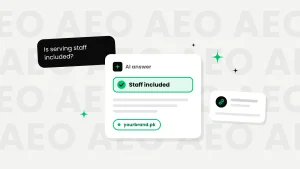
Similarly, GEO vs AEO has no universally agreed dividing line. AEO often emphasises direct answers, while GEO emphasises generated responses; businesses and tools frequently use these labels interchangeably.
For a Pakistani solar installer, the practical work remains connected: explain installation options, document experience, and maintain accurate service details. Review what your existing SEO strategy already covers before paying for overlapping services under different names.
How One Question Can Draw on Many Sources?
An AI-generated answer may combine information from several pages. Google describes retrieval-augmented generation as using retrieved information to support a response. Its query fan-out process can run related searches to explore different parts of a question.
For example, a question about choosing a solar installer might lead to searches about equipment warranties, installation standards, and maintenance support. This illustrates the process; it is not a record of a specific search.
Build useful coverage around these connected concerns. A detailed service page can link to relevant warranty explanations and project examples. You do not need a separate page for every possible wording of a question.
Publish Evidence Your Competitors Cannot Copy
Generative engine optimization gives you another reason to publish knowledge gained through actual work. Generic claims such as “We deliver quality installations” tell buyers little about your capabilities.
A solar installer could strengthen a project case study with:
- Original photographs showing the installation.
- Equipment specifications and reasons for selecting them.
- Site constraints and how the team addressed them.
- Clearly explained warranty coverage and exclusions.
If you report performance figures, state the measurement period and relevant conditions. Include first-hand experience that helps readers assess whether a solution fits their needs. Obtain permission before identifying customers, and never invent results to make an example more impressive.
Give AI Comparisons Accurate Local Details
For generative engine optimization in Pakistan, review whether your website provides enough detail for a useful comparison. A solar installation quote should explain equipment, installation charges, service coverage, and after-sales support. Show prices in PKR where appropriate, stating what is included and when the estimate was updated.
Keep relevant details consistent across your website, Google Business Profile, and product listings. If your team serves Lahore but charges extra for travel outside the city, explain that clearly.
Choose English or Urdu according to your customers’ needs. Accurate translations should preserve warranty conditions, technical specifications, and pricing limitations rather than simplify away information that affects a purchase.
Fix Access Problems Before Chasing GEO Tricks
Before buying another optimisation tool, check whether search engines can access your important pages. Use Google Search Console to investigate indexing issues, review broken internal links and test whether service details display properly on mobile devices.
For Google’s generative search features, there is no requirement to create llms.txt files, add special AI schema, or split every explanation into tiny paragraphs. Google’s guidance prioritises established search fundamentals and useful content.
Other platforms may handle websites differently, so investigate specific access problems rather than assuming one fix suits every system. Clear navigation, readable information, and working enquiry forms also help customers who reach your website.
Check Whether Visibility Leads to Interest
Improving AI brand visibility means little if you never check how your business is represented. Choose a small set of relevant buying questions and record the platform, date, cited sources, and details mentioned about your services.
Repeat the checks periodically, noting changes rather than treating one response as a permanent position. Tools such as Semrush AI Visibility Toolkit can support monitoring, but their results reflect the prompts and platforms they cover.
Alongside these observations, review identifiable referral traffic and qualified enquiries. Ask prospects how they found you where appropriate. A mention, a visit and a booked consultation are separate outcomes, so measure each accordingly.
Final Decision
Generative engine optimization starts with information that helps people understand and evaluate your business. Review one important service page: does it explain your offering, support claims with evidence, and address the details customers need before making a decision?
For Pakistani brands, practical progress comes from improving those details, keeping information current, and checking how the business appears across relevant platforms. Measure meaningful enquiries alongside visibility. If you need help identifying content gaps or unclear business information, discuss your website’s priorities with Optimization.pk and choose a focused starting point.
Questions Pakistani Business Owners Ask
Do I need a separate GEO budget alongside SEO?
Review what your existing plan already covers. Content improvements, technical fixes, and accurate business information often serve both. Allocate extra budget only to clearly identified gaps.
Can Urdu content support my business’s AI visibility?
Urdu content can address the needs of Urdu-speaking customers. Publish accurate, useful explanations and review relevant responses. Visibility varies across platforms, languages, and queries.
Does a .pk domain guarantee inclusion in AI answers?
No. A .pk domain can communicate your connection to Pakistan, but it does not guarantee selection. Focus on useful content, accessible pages, and reliable business details.